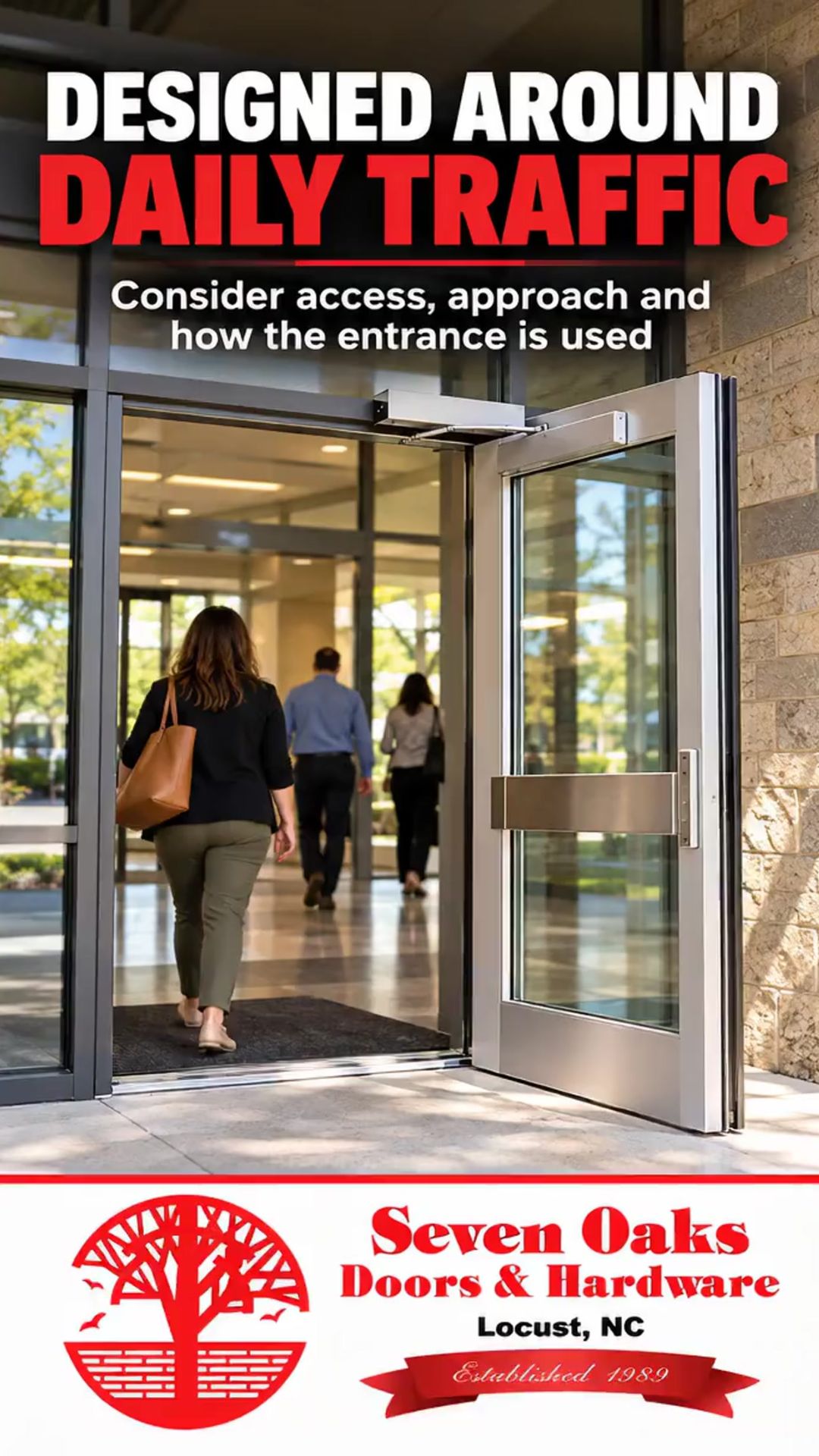
In a multi-tenant building, one entrance may serve tenants, visitors, delivery personnel, and property staff. Other doors may lead to stairwells, management offices, storage, or mechanical spaces. Planning commercial doors for multi-tenant buildings starts with...

Commercial Electric Strike Retrofit Planning | Seven Oaks
Adding an electric strike to an existing commercial door can support electronic access while allowing the opening to keep its mechanical lock. Before choosing hardware, it is important to evaluate how the lock, door, frame, wiring, and access-control system will work...
Commercial Door Key Control During Building Renovations: What Facility Managers Should Plan
Building renovations can change how people move through and use a facility. Offices may relocate, departments may change, and contractors may need temporary access to work areas. When a project includes new doors, locks, or other hardware, facility managers should...
Commercial Door Handing and Swing: How to Identify the Correct Configuration
When replacing a commercial door or ordering new hardware, it helps to know which way the door is handed and how it swings. These details affect the door, frame, hinges, lock, closer, and other hardware. If the handing is unclear, a quick description may not be enough...
Planning an Automatic Door Operator Retrofit for an Existing Commercial Entrance
An automatic door operator can make a commercial entrance easier to use, but adding one to an existing doorway takes more planning than choosing a push button. The door, frame, hardware, traffic patterns, and surrounding space all affect which solution may fit....
Commercial Door Reinforcement: Strengthening Existing Doors and Hardware
Commercial doors work hard every day. In schools, healthcare facilities, churches, offices, and manufacturing buildings, repeated use puts stress on hinges, locks, closers, and the surrounding door structure. When hardware loosens or mounting areas begin to...