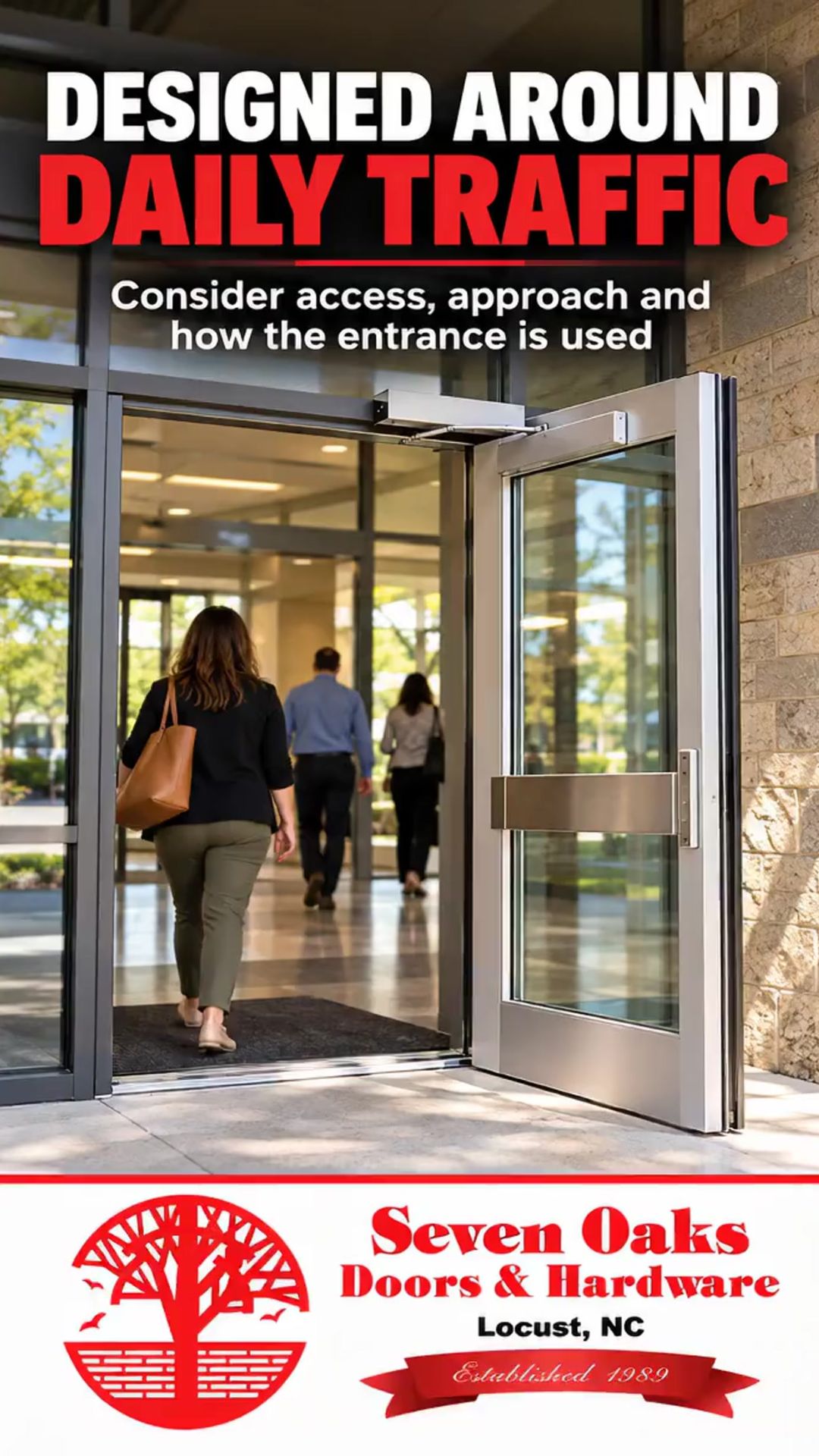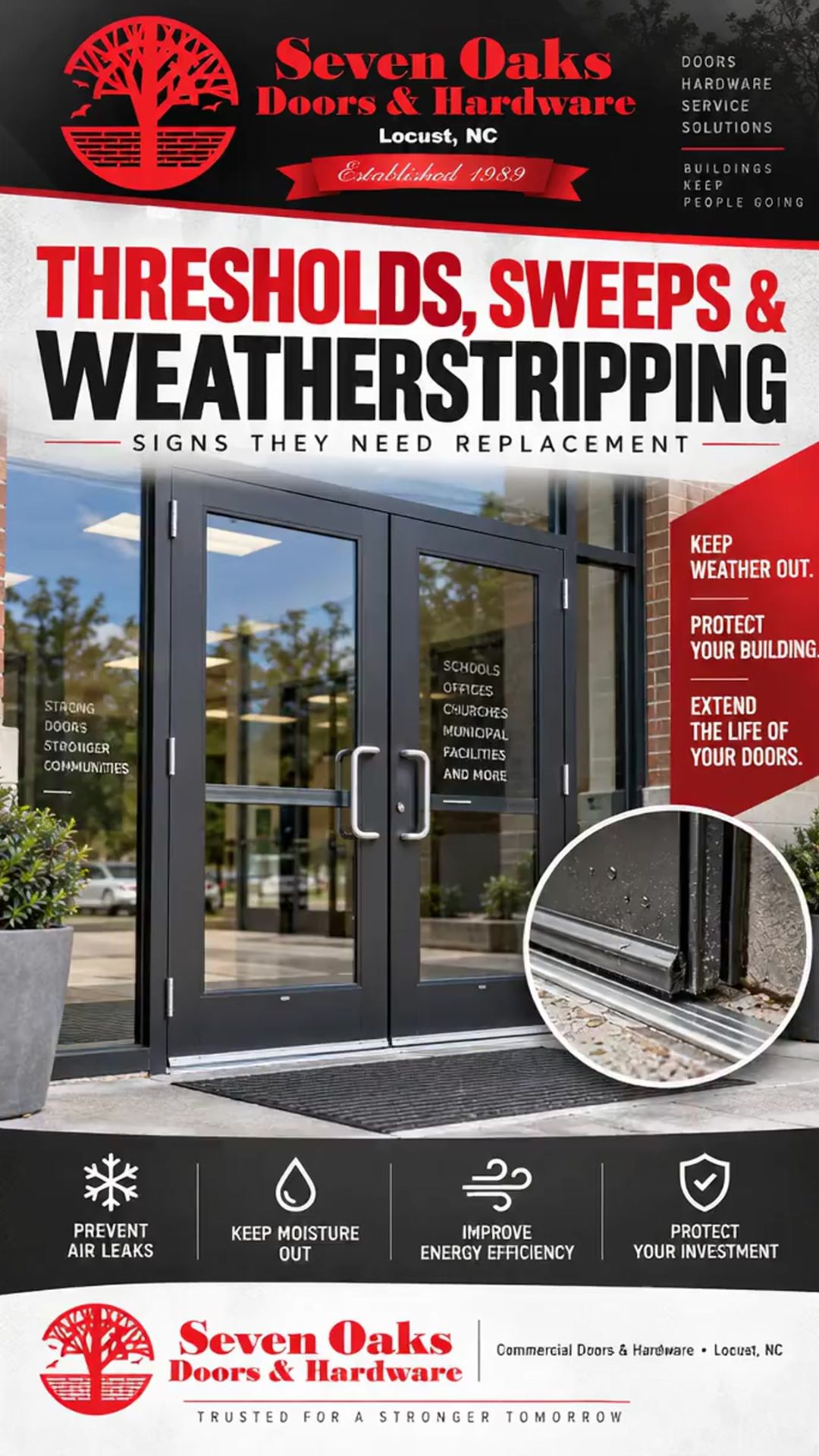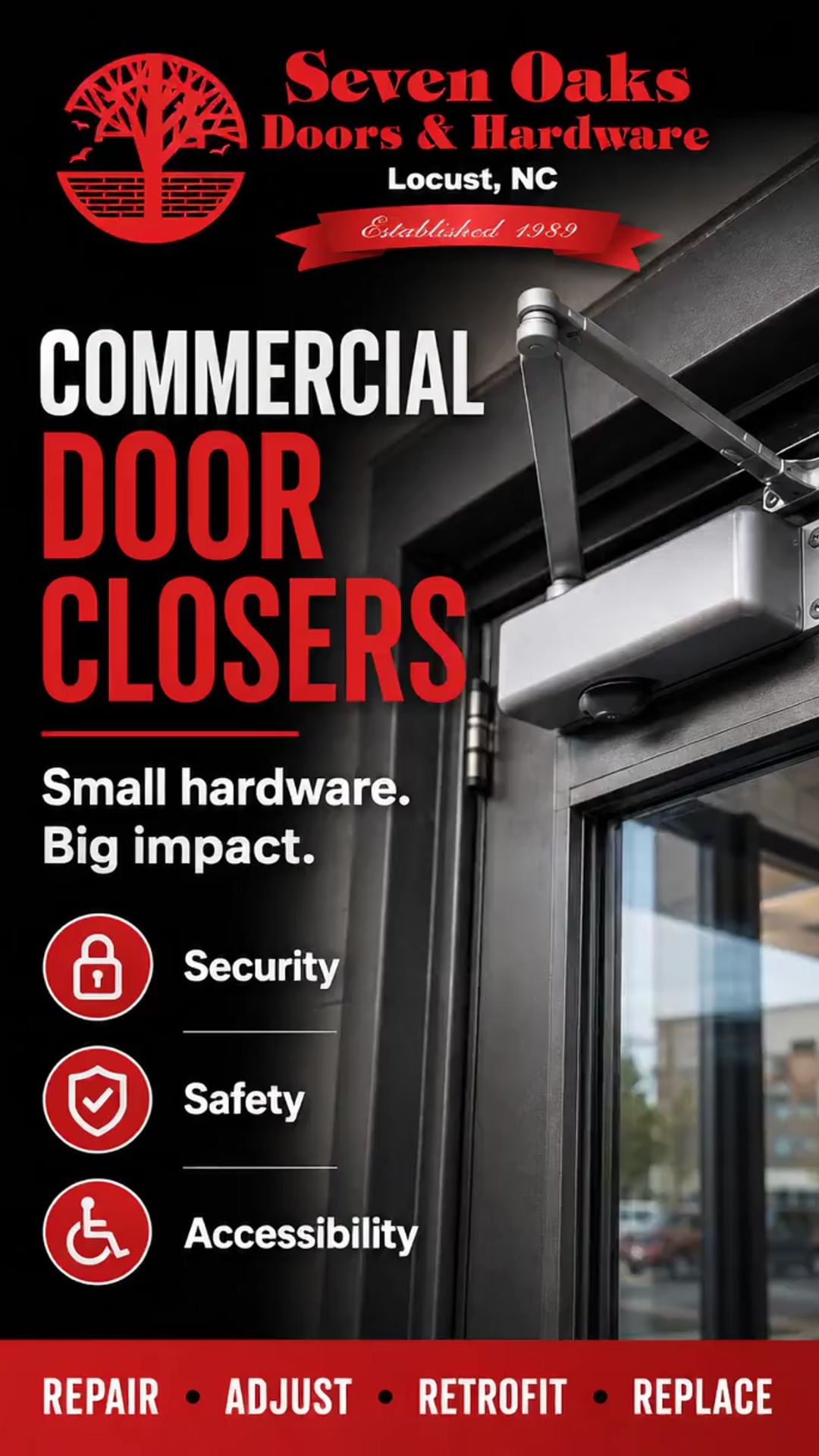
A commercial door closer may be one of the least noticeable pieces of hardware on a building—until it stops working correctly. A door that slams, closes too slowly, refuses to latch, or must be pulled shut by hand can create problems for security, accessibility,...
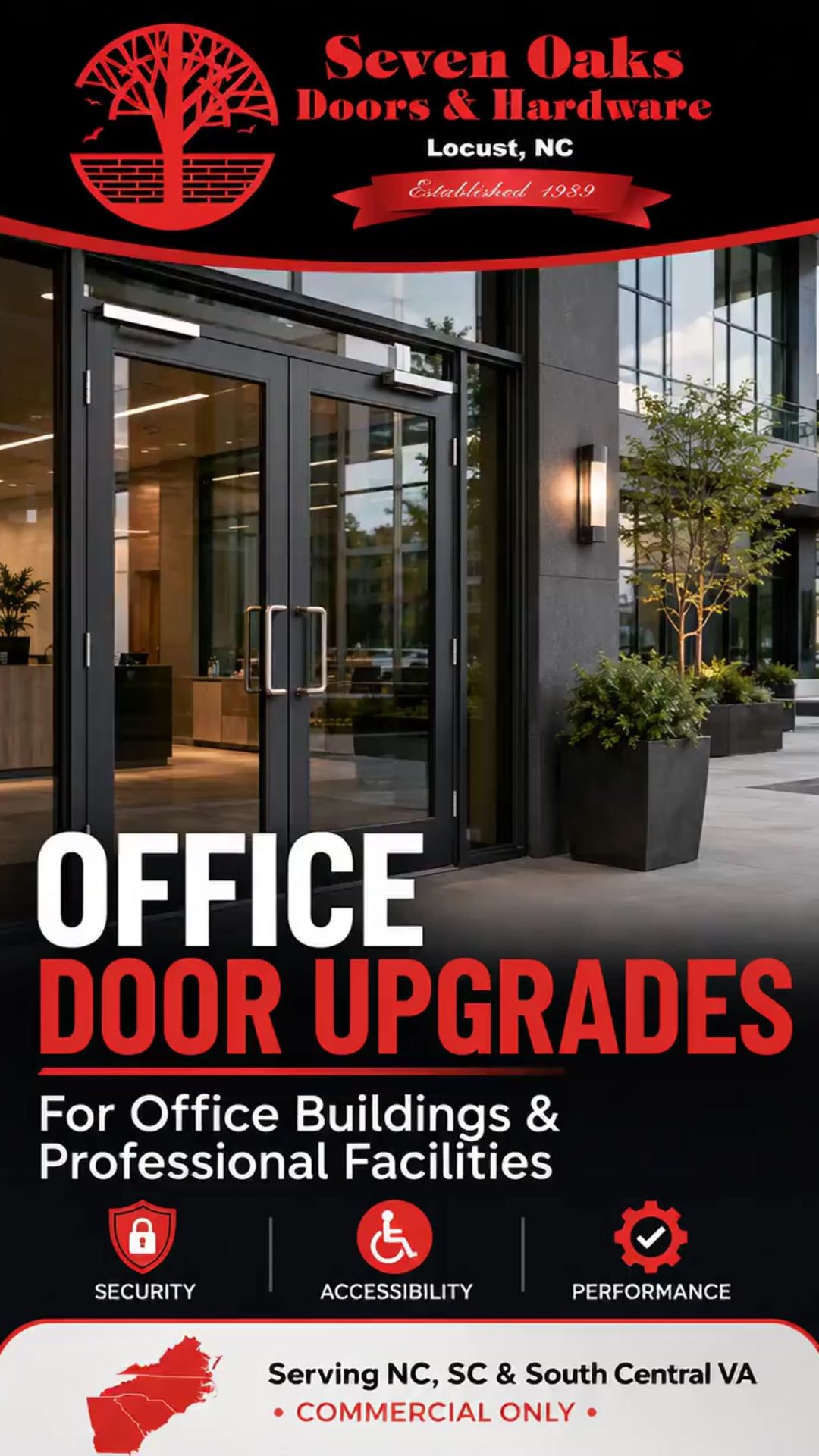
Commercial Door and Hardware Upgrades for Office Buildings and Professional Facilities
Office buildings depend on doors and hardware that support security, accessibility, daily traffic, and a professional appearance. From exterior entrances and tenant suites to conference rooms, stairwells, storage areas, and restricted offices, each opening serves a...
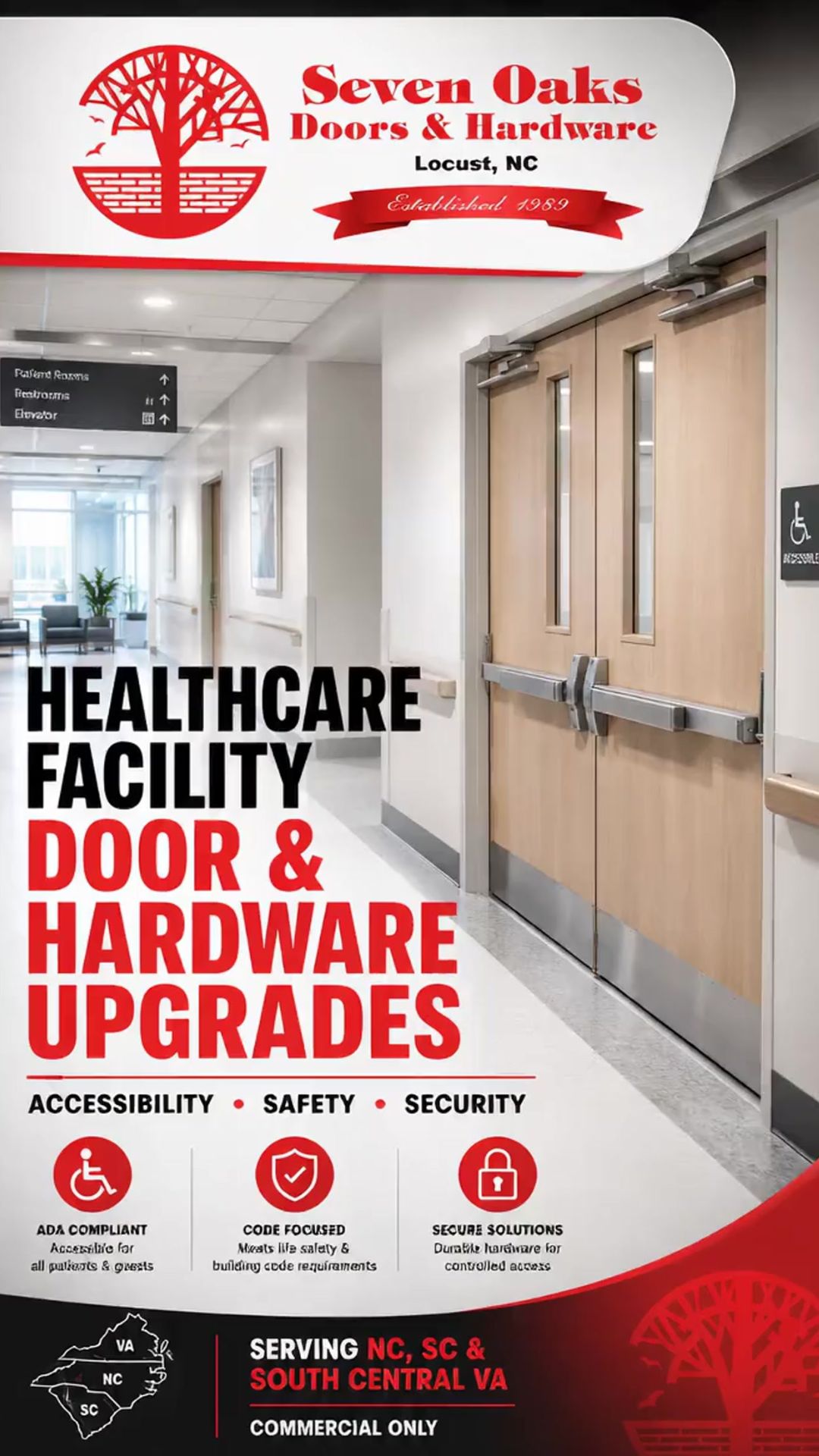
Commercial Door and Hardware Upgrades for Healthcare Facilities
Healthcare facilities depend on safe, reliable, and accessible doors throughout the building. Hospitals, medical offices, outpatient centers, rehabilitation facilities, assisted-living communities, urgent care centers, and specialty clinics all serve patients,...
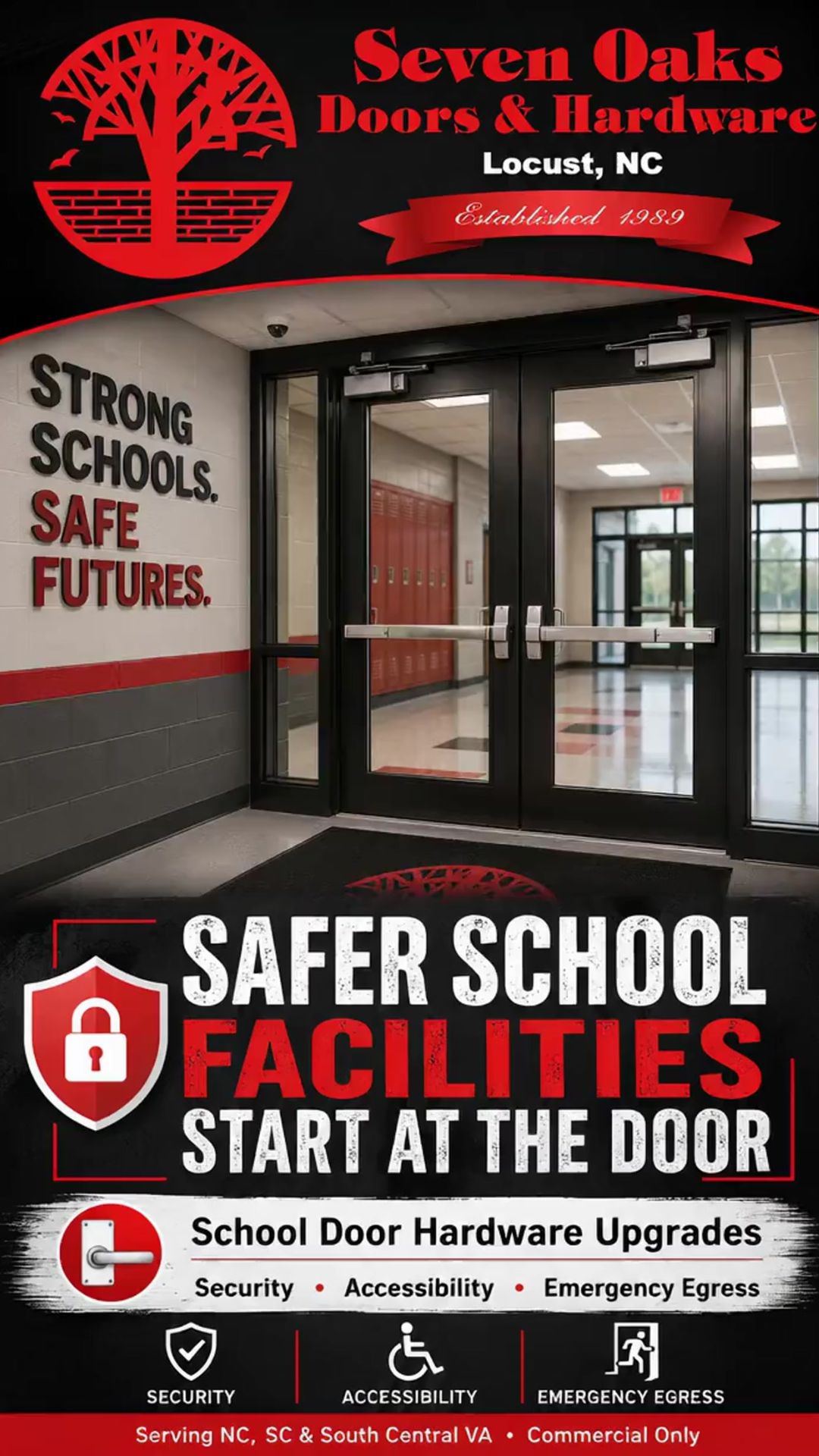
School Door Hardware Upgrades for Safer Educational Facilities
Doors and hardware play an important role in the safety, security, accessibility, and daily operation of schools. Every entrance, classroom, office, gymnasium, cafeteria, and mechanical area has different performance requirements. When door components become damaged,...
Panic Hardware and Exit Devices for Commercial Buildings
Commercial doors must provide security during normal operations while allowing people to exit quickly during an emergency. This balance is especially important at schools, healthcare facilities, churches, municipal buildings, offices, industrial properties, and other...
ADA Door Hardware for Commercial Buildings: What Facility Managers Should Know
Accessibility is an important consideration for every commercial facility. Entrances and interior doors must be usable by employees, customers, students, patients, visitors, and other building occupants with a wide range of physical abilities. When doors are difficult...