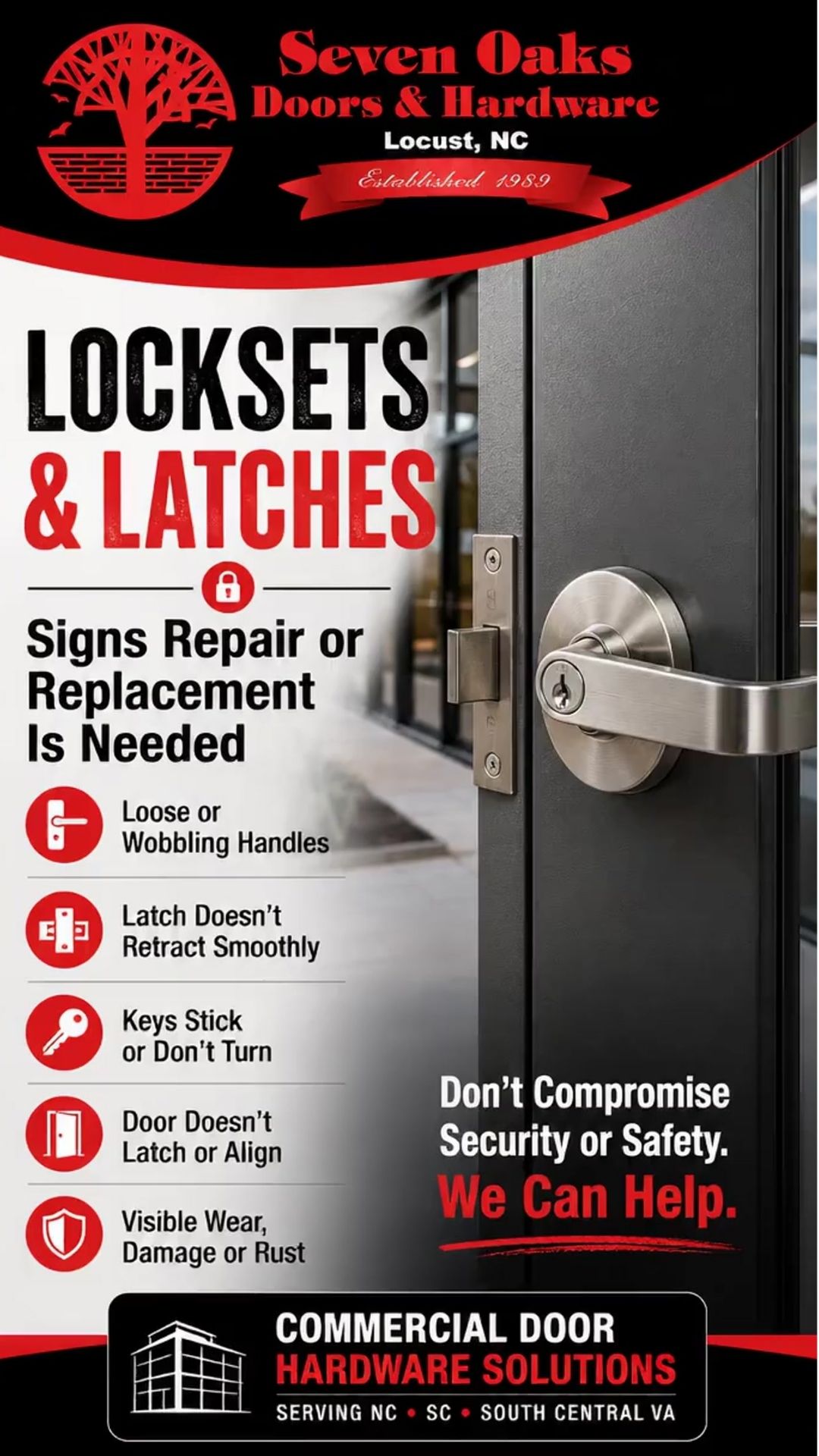
A commercial door may still open and close while the lockset or latch is beginning to fail. Sticking handles, loose hardware, doors that require extra force to latch, and locks that no longer operate consistently can all signal a developing problem. For schools,...
Commercial Door Hinges: When Repair Isn’t Enough
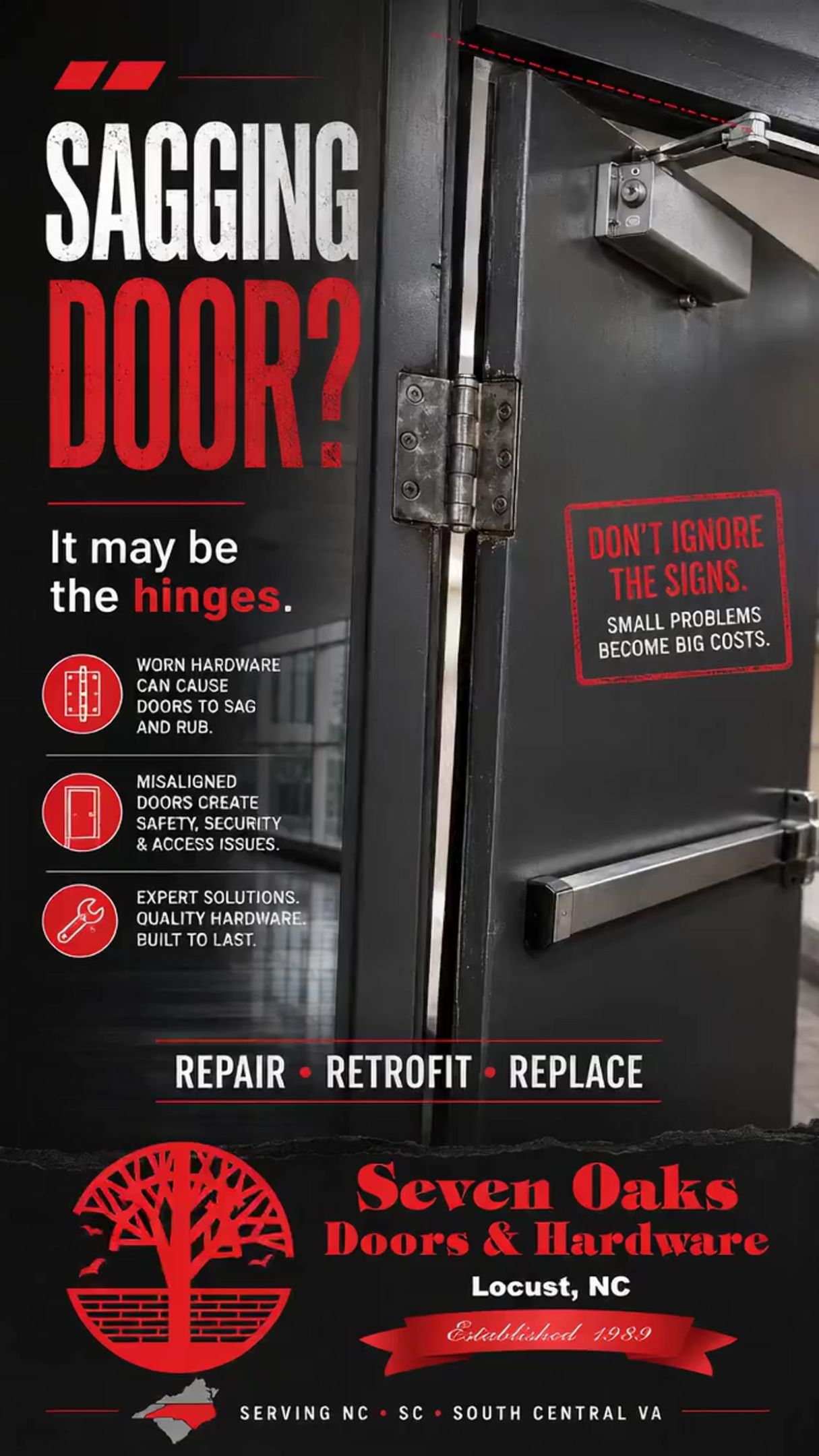
A commercial door that sags, scrapes the floor, rubs the frame, or refuses to latch correctly may have a hinge problem. Because hinges support the full weight of the door and guide its movement every time the opening is used, worn or damaged hinges can quickly affect...
Commercial Door Closers: Signs They Need Adjustment, Repair, or Replacement
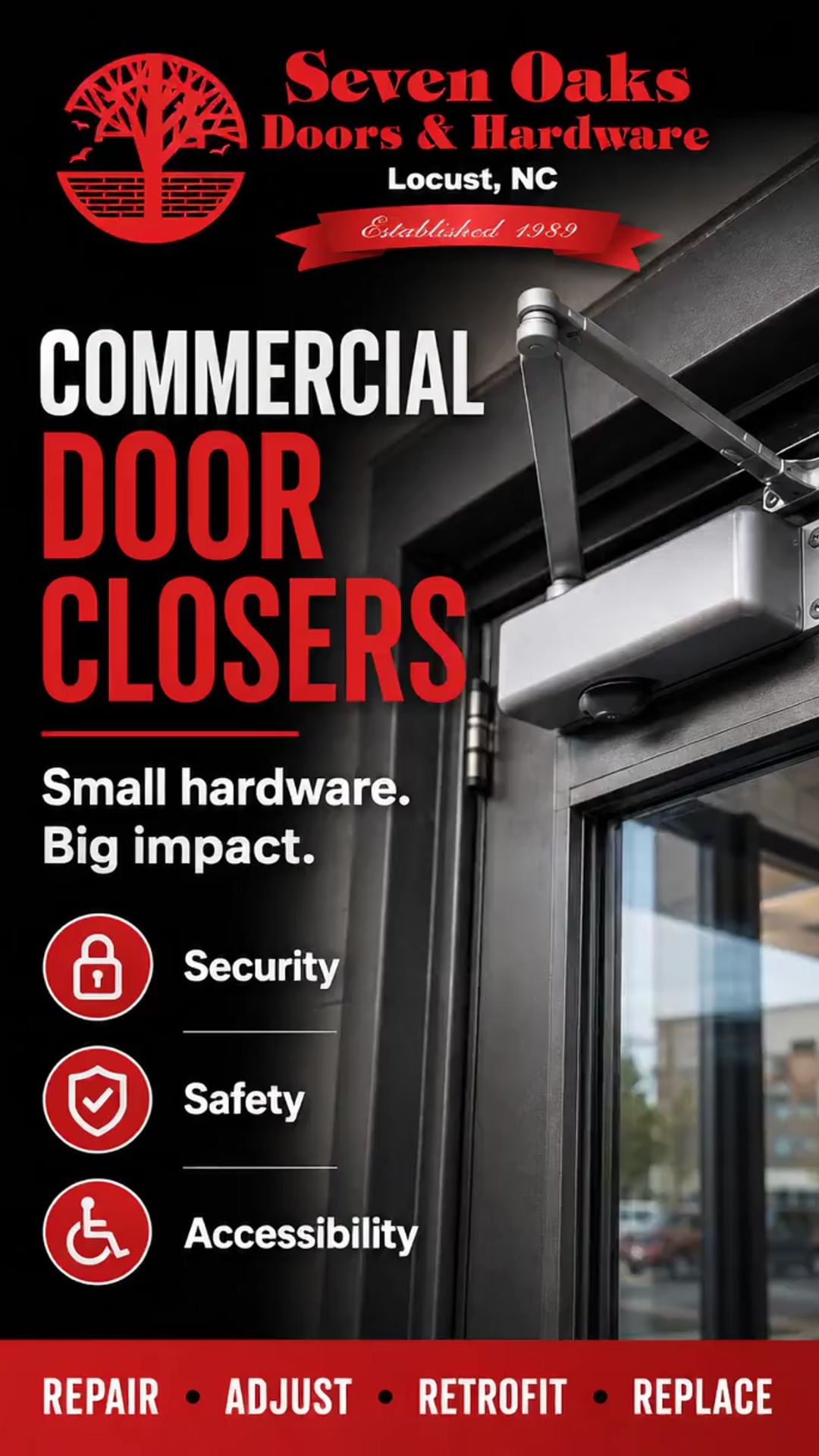
A commercial door closer may be one of the least noticeable pieces of hardware on a building—until it stops working correctly. A door that slams, closes too slowly, refuses to latch, or must be pulled shut by hand can create problems for security, accessibility,...
Commercial Door and Hardware Upgrades for Office Buildings and Professional Facilities
Office buildings depend on doors and hardware that support security, accessibility, daily traffic, and a professional appearance. From exterior entrances and tenant suites to conference rooms, stairwells, storage areas, and restricted offices, each opening serves a...
Electronic Access Control Upgrades for Commercial Doors
Commercial buildings increasingly rely on electronic access control to improve security, manage employee access, and reduce dependence on traditional keys. Schools, healthcare facilities, manufacturing plants, churches, municipal buildings, offices, and other...
Commercial Door Upgrades for Industrial and Manufacturing Facilities
Industrial and manufacturing buildings place heavy demands on their doors, frames, locks, hinges, closers, exit devices, and access-control systems. Employees, equipment, deliveries, vendors, and materials may move through the same openings throughout the day. Over...