In a busy commercial facility, the lower portion of a door often takes more abuse than almost any other part of the opening.
Carts strike it. Shoes push against it. Janitorial equipment bumps it. Deliveries move through it. In healthcare, schools, manufacturing plants, churches, municipal buildings, and other high-traffic environments, this repeated contact can dent, scratch, gouge, or otherwise damage commercial doors.
Commercial door protection plates provide an additional layer of protection in areas where everyday traffic can shorten the life of an otherwise serviceable door.
Seven Oaks Doors & Hardware helps commercial facilities across North Carolina, South Carolina, and South Central Virginia repair, retrofit, and protect existing commercial openings.
What Is a Commercial Door Kick Plate?
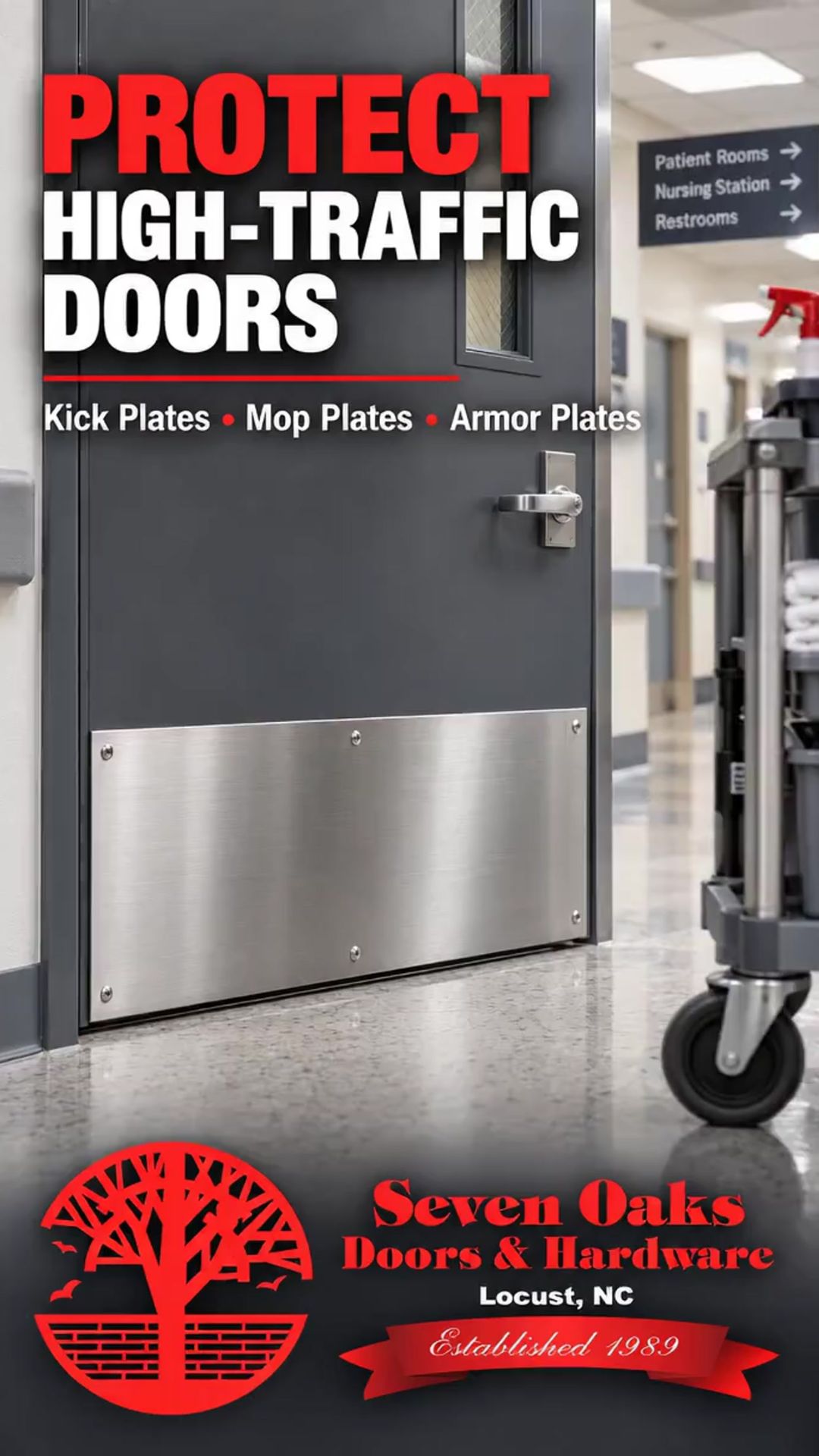
A kick plate is mounted near the bottom of a door to help protect the face from repeated contact.
Despite the name, the damage is not always caused by someone literally kicking the door. Lower doors are frequently struck by shoes, hand trucks, carts, boxes, cleaning equipment, wheelchairs, and other objects moving through busy openings.
Adding appropriate protective hardware can help reduce cosmetic and physical damage in high-use areas while maintaining a cleaner, more professional appearance.
What Is a Mop Plate?
Mop plates generally protect the very bottom area of a door where cleaning equipment, moisture, and repeated contact can cause deterioration or finish damage.
They can be particularly useful in facilities where floors are frequently cleaned or where lower door surfaces receive regular exposure to janitorial equipment.
When damage has already extended beyond the surface, however, a protection plate should not simply be used to conceal a larger structural problem. The condition of the door should be evaluated first.
When Is an Armor Plate Appropriate?
Armor plates provide a larger protected area on the lower portion of a commercial door. They may be appropriate for openings exposed to heavier traffic, carts, equipment, deliveries, or repeated impact.
Manufacturing plants, healthcare facilities, institutional buildings, service corridors, schools, and loading or receiving areas are examples of environments where additional door protection may make sense.
For particularly demanding environments, Seven Oaks can also help facilities evaluate vandal-resistant commercial door solutions when ordinary protective hardware may not provide enough durability.
Protection Plates Can Be Part of a Retrofit Strategy
A facility does not necessarily need to wait until a damaged door requires replacement.
If the existing door is still structurally sound, adding protection plates may be part of a broader commercial door and hardware retrofit designed to extend service life and reduce recurring damage.
Other upgrades may include new hinges, closers, locks, exit devices, thresholds, seals, or additional hardware depending on the condition and use of the opening.
Protecting the Door Does Not Fix Alignment Problems
Protection plates are intended to help reduce impact damage. They do not correct a door that drags, binds, fails to latch, or sits incorrectly in the frame.
If an opening is difficult to operate, the door, frame, hinges, closer, and hardware should be evaluated together. Seven Oaks explains several common causes in Why Commercial Doors Drag, Bind, or Fail to Close Properly.
Protect High-Traffic Commercial Doors Before Damage Adds Up
Commercial doors are long-term facility assets. Taking steps to protect high-use openings can help reduce unnecessary surface damage and make ongoing maintenance more manageable.
Seven Oaks provides commercial doors and frames, hardware, retrofitting, repair, and replacement solutions for facilities throughout NC, SC, and South Central VA.
If high-traffic doors are becoming dented, scratched, or repeatedly damaged by carts, equipment, or daily use, request a quote from Seven Oaks Doors & Hardware to discuss protection, repair, or replacement options.