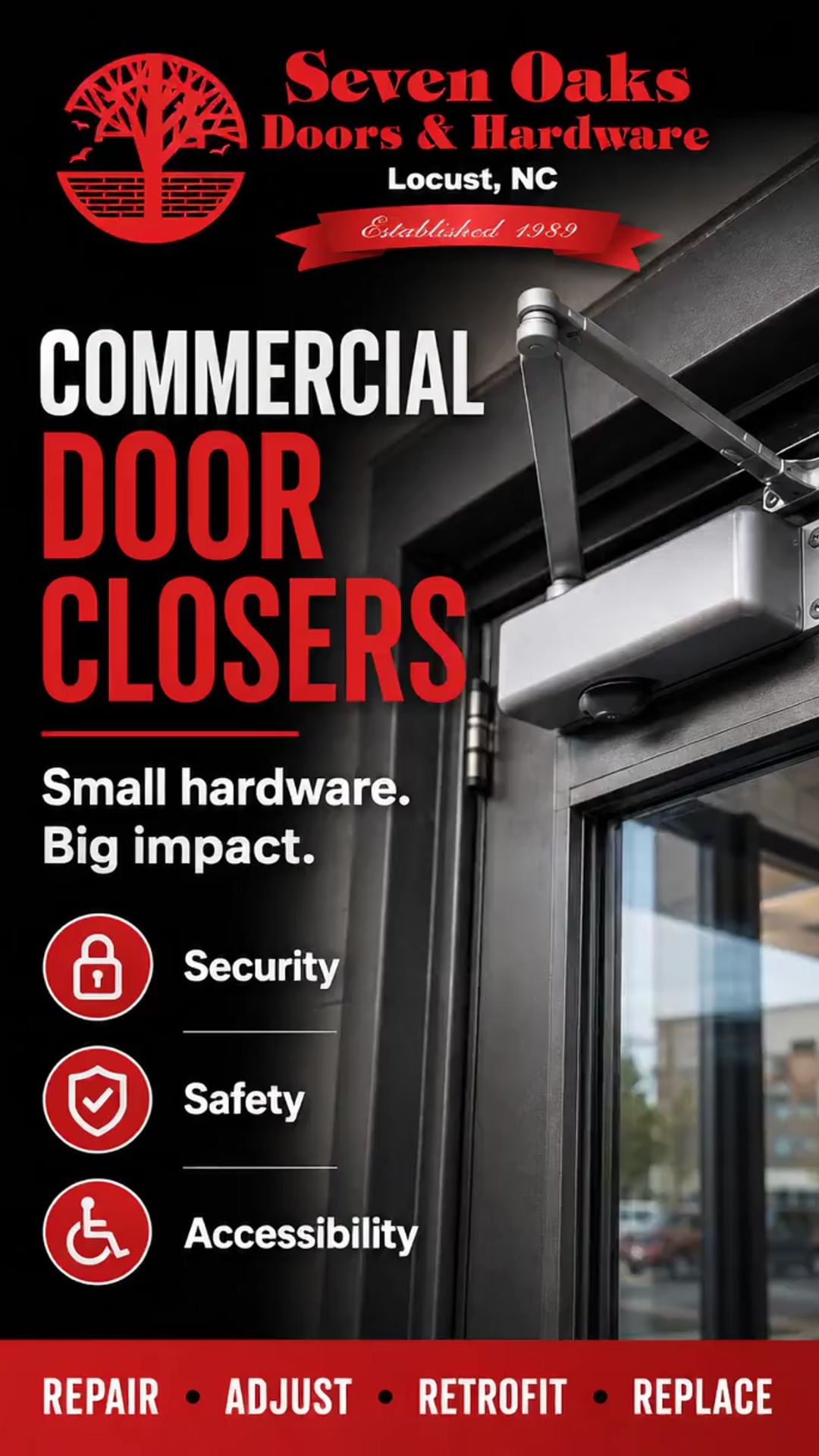
A commercial door closer may be one of the least noticeable pieces of hardware on a building—until it stops working correctly. A door that slams, closes too slowly, refuses to latch, or must be pulled shut by hand can create problems for security, accessibility, traffic flow, and the long-term condition of the door and frame.
For schools, healthcare facilities, churches, offices, manufacturing plants, municipal buildings, and other commercial properties, properly operating door closers are an important part of dependable commercial doors and frames. Recognizing the warning signs early can help facility teams address smaller problems before they lead to damaged hardware or unreliable openings.
What Does a Commercial Door Closer Do?
A commercial door closer controls the door as it returns to the closed position after someone passes through the opening. It helps regulate the closing cycle and allows the door to return to the frame and latch properly.
When a closer is correctly selected and adjusted for the door, opening, and amount of traffic, operation should be smooth and predictable. When the closer is worn, damaged, leaking, improperly adjusted, or no longer appropriate for the opening, performance can begin to deteriorate.
Common Signs a Commercial Door Closer Needs Attention
Slamming is one of the most noticeable warning signs. A door that closes too aggressively can be disruptive and may place unnecessary stress on hinges, locks, frames, glass, and other components.
A door that closes very slowly—or stops before reaching the frame—can be equally problematic. Exterior doors may remain unsecured, conditioned air can escape, and doors that are expected to close and latch may not function as intended.
Other warning signs can include:
- Visible fluid or oil around the closer
- Jerky or inconsistent door movement
- Unusual resistance when opening
- Loose closer or arm hardware
- A closer arm that shifts, binds, or makes unusual noises
- A door that repeatedly has to be pushed or pulled completely shut
Does the Closer Need Adjustment or Replacement?
Not every closer problem requires a new closer. Sometimes the issue involves loose mounting hardware, alignment, worn hinges, adjustments, or another part of the opening.
That is why evaluating the complete door assembly is important.
Seven Oaks Doors & Hardware specializes in commercial door and hardware retrofitting for existing facilities. An evaluation can help determine whether the closer itself is failing or whether the door, frame, hinges, locking hardware, or another component is contributing to the problem.
When a closer is leaking, physically damaged, worn beyond reliable adjustment, or no longer appropriate for the door, replacement may provide the better long-term solution.
Commercial Door Closers and ADA Accessibility
Closer performance can also affect how easily people use an entrance. Excessive opening resistance, poorly controlled closing, or unpredictable door movement can make an opening more difficult to navigate.
When planning ADA-compliant commercial door upgrades, facilities should consider the entire opening—including the closer, hinges, threshold, locking hardware, and automatic or low-energy operators when appropriate.
Closers Are Important on Fire-Rated Doors
Commercial fire doors and hardware require additional attention because fire-rated openings are designed to close and latch as part of the complete opening system.
If a door closer cannot reliably return a fire-rated door to the closed and latched position, the opening should be evaluated rather than repeatedly propped open or manually pulled shut.
Look at the Complete Commercial Door Opening
Replacing one failing component without identifying the underlying problem can lead to repeated repairs. Seven Oaks evaluates the door, frame, hinges, closer, locking hardware, exit devices, accessibility requirements, and security needs together.
Since 1989, Seven Oaks Doors & Hardware has helped commercial facilities throughout North Carolina, South Carolina, and South Central Virginia upgrade existing doors and hardware for improved performance, security, and accessibility.
If your commercial doors are slamming, closing too slowly, failing to latch, or showing other signs of closer problems, request a commercial door and hardware quote from Seven Oaks Doors & Hardware to discuss the best repair, retrofit, or replacement solution for your facility.