Fire-rated doors are an essential part of a commercial building’s life-safety system. When properly installed and maintained, these doors help slow the spread of fire and smoke, protect exit routes, and give occupants more time to leave the building safely. However, even a fire door that appears to be in good condition can have problems that may cause it to fail an inspection.
Understanding the most common fire door inspection failures can help facility managers, school administrators, healthcare teams, church leaders, and building owners identify concerns before they become serious safety or compliance issues.
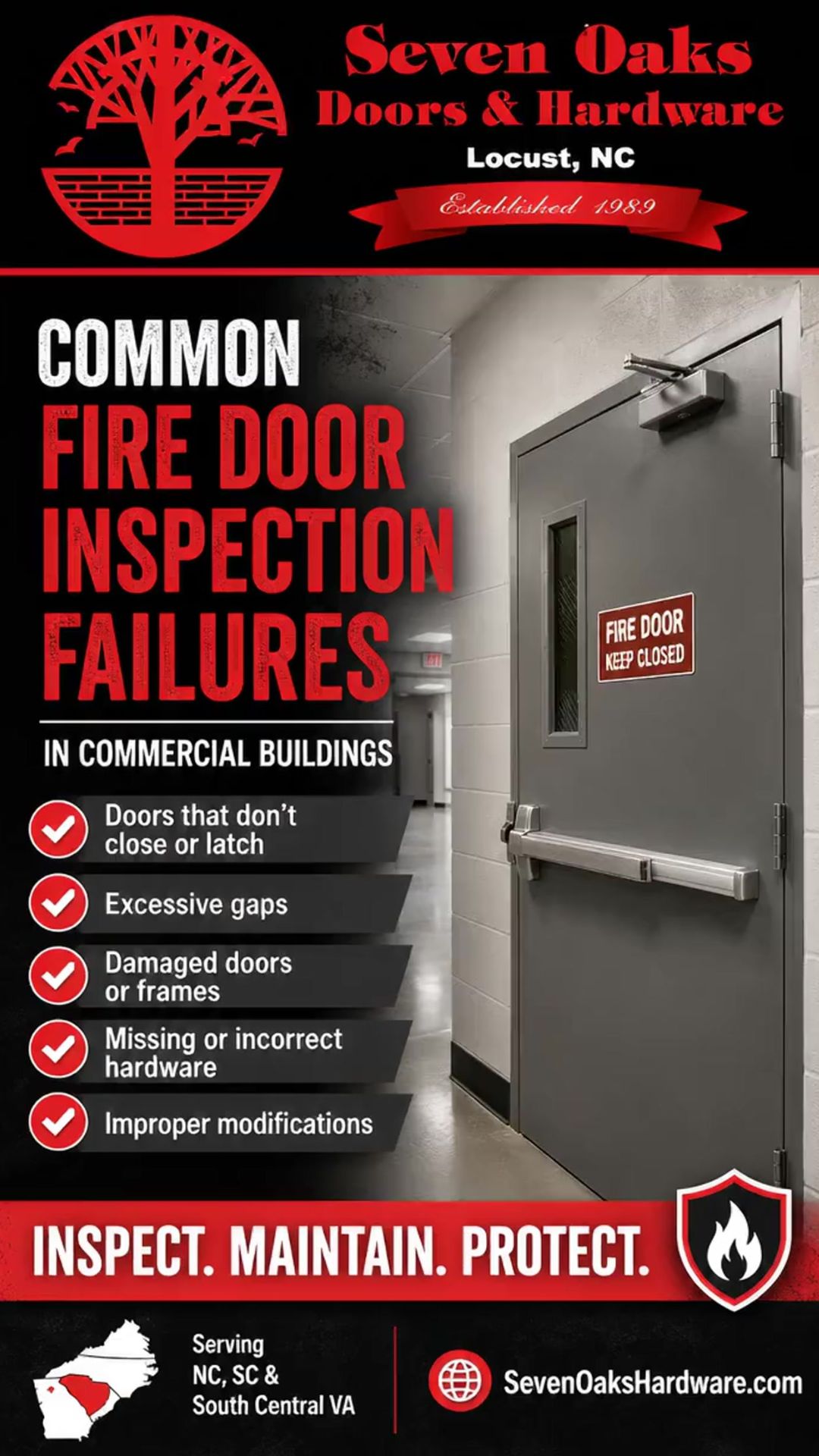
1. Fire Doors That Do Not Close Completely
A fire-rated door must be able to close fully without being pushed or pulled into position. Problems with hinges, closers, alignment, flooring, weatherstripping, or the door frame can prevent the door from closing properly.
A door that remains partially open cannot provide the protection the opening was designed to deliver. Propping a fire door open with a wedge, chair, or other object can also compromise the opening unless an approved automatic-release system is being used.
2. Doors That Fail to Latch
Closing is only part of the requirement. Most fire-rated doors must also positively latch when they close. A misaligned latch, damaged strike, loose hardware, sagging door, or worn lockset may prevent the door from securing correctly.
Seven Oaks provides professional fire doors and hardware solutions for existing commercial openings throughout North Carolina, South Carolina, and South Central Virginia.
3. Excessive Gaps Around the Door
Fire door assemblies must maintain appropriate clearances around the top, sides, and bottom of the door. Excessive gaps can allow smoke and heat to move through the opening more quickly.
Gaps may develop because of building movement, damaged hinges, improper installation, worn components, or changes to the finished floor. Simply adding unapproved material around the opening is not a safe solution. The cause of the clearance problem should be properly evaluated.
4. Damaged Doors or Frames
Dents, holes, cracks, rust, warping, delamination, and frame damage are among the most common fire door inspection failures. Damage may affect more than appearance. It can weaken the assembly or prevent the door from closing and latching as intended.
Some problems may be repairable, while others may require replacement. Seven Oaks specializes in commercial door and hardware retrofitting, helping facilities improve existing openings without unnecessary reconstruction whenever an appropriate retrofit solution is available.
5. Missing, Loose, or Incorrect Hardware
Fire doors are tested as complete assemblies. Hinges, closers, locks, exit devices, coordinators, protection plates, glazing, and other components must be appropriate for the opening.
Missing screws, loose hinges, disconnected closers, field modifications, or unapproved hardware can create inspection problems. Hardware should not be removed, altered, or replaced without considering the door’s fire rating and the requirements of the complete assembly.
6. Improper Door Modifications
Drilling holes, installing surface hardware, cutting vision openings, or making other changes to a fire-rated door can affect its rating. Even modifications made for security, access control, or accessibility must be completed with the fire-rated assembly in mind.
Facilities planning security or accessibility improvements should work with a contractor who understands both life-safety and operational requirements. Seven Oaks offers integrated electronic access solutions for commercial doors as well as ADA-compliant handicap entry solutions.
7. Painted or Missing Fire Door Labels
Fire-rated doors and frames typically include labels identifying their rating and approval information. Labels that are painted over, damaged, missing, or unreadable can create documentation and inspection concerns.
Facility teams should avoid painting over labels and should include label checks in routine maintenance inspections.
Address Fire Door Problems Before They Become Emergencies
Regular inspections and preventive maintenance can help identify common fire door inspection failures before they affect safety, compliance, or building operations. Warning signs such as dragging doors, slamming closers, loose hardware, excessive gaps, and failure to latch should not be ignored.
Seven Oaks Doors & Hardware has served commercial facilities since 1989, providing professional commercial doors and hardware, replacement, retrofitting, installation, and maintenance solutions.
To discuss a fire-rated opening or another commercial door concern, request a quote from Seven Oaks Doors & Hardware.