Accessibility is an important consideration for every commercial facility. Entrances and interior doors must be usable by employees, customers, students, patients, visitors, and other building occupants with a wide range of physical abilities. When doors are difficult to open or the hardware is hard to operate, even an otherwise accessible building can create unnecessary barriers.
For facility managers, evaluating ADA door hardware for commercial buildings is an important part of maintaining a safe, functional, and welcoming property. Seven Oaks Doors & Hardware helps organizations identify accessibility concerns and complete practical door and hardware upgrades in existing facilities throughout North Carolina, South Carolina, and South Central Virginia.
What Makes Commercial Door Hardware Accessible?
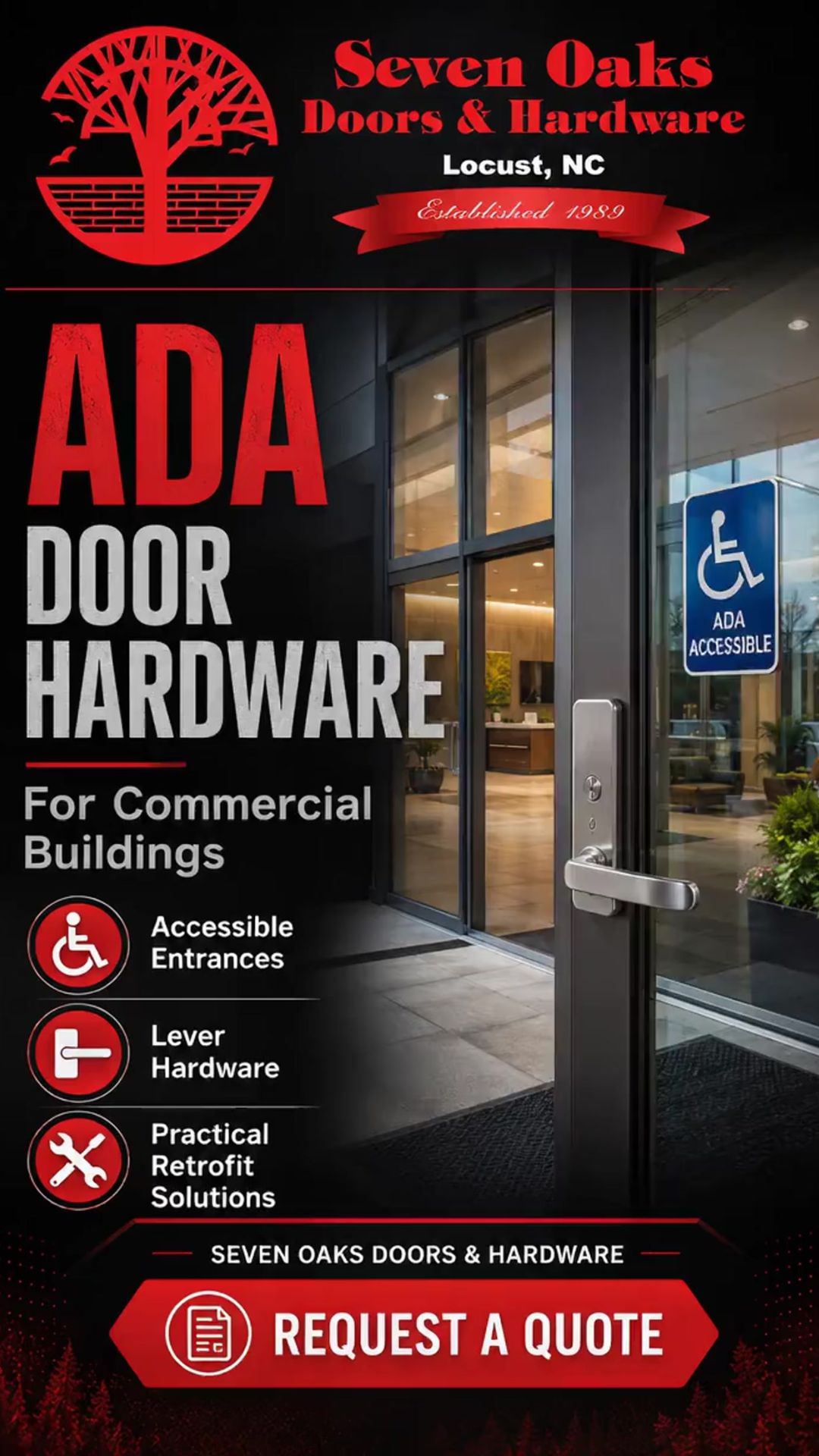
Accessible door hardware should be easy to reach and operate without requiring tight grasping, pinching, or twisting of the wrist. This is one reason lever-style handles, push bars, pulls, and properly selected exit devices are often more accessible than traditional round doorknobs.
However, the type of handle is only one consideration. Facility managers should also evaluate the height and placement of the hardware, the force required to open the door, the door closer, maneuvering clearances, threshold conditions, and the amount of clear opening provided by the doorway.
Because every opening is different, a professional evaluation can help determine which parts of the existing assembly can remain and which components should be adjusted or replaced. Seven Oaks specializes in commercial door and hardware retrofitting for existing buildings.
Common Accessibility Problems in Aging Facilities
Older schools, churches, healthcare facilities, offices, industrial buildings, and municipal properties may have doors and hardware that were installed before current accessibility expectations became standard. Years of use can also cause doors to become more difficult to operate.
Common concerns include:
- Round knobs that require grasping and twisting
- Doors that require excessive force to open
- Closers that cause doors to shut too quickly
- Hardware positioned at an inaccessible height
- Thresholds that interfere with wheelchairs or mobility devices
- Insufficient maneuvering space near the opening
- Automatic operators or push buttons that no longer work properly
- Doors that drag, bind, or fail to align with their frames
Replacing one piece of hardware without examining the complete opening may not solve the problem. The door, frame, hinges, closer, lock, threshold, and surrounding space must work together as a complete system.
Automatic Door Operators and Accessible Entrances
Automatic and low-energy door operators can make entrances easier to use, particularly in healthcare facilities, schools, public buildings, churches, and other properties that serve a wide range of visitors. Push-button operators may also provide a practical retrofit solution when an existing manual door is difficult for some occupants to operate.
Seven Oaks provides handicap entry and ADA accessibility solutions, including the evaluation and installation of commercial door operators and related hardware. Recommendations are based on the condition of the opening, how the entrance is used, and the needs of the facility.
Accessibility Must Work with Security and Life Safety
Accessibility upgrades should not compromise security, fire protection, or emergency egress. A commercial opening may need to provide accessible operation while also supporting access control, panic hardware, positive latching, or fire-door requirements.
Seven Oaks can help facility managers coordinate accessible hardware with electronic access control systems, fire-rated doors and hardware, and other building safety requirements.
Plan ADA Door Hardware Upgrades with Seven Oaks
Facility managers do not always need to replace an entire commercial door assembly to improve accessibility. In many cases, targeted adjustments, new lever hardware, a properly configured closer, an automatic operator, or other retrofit improvements can extend the life of the existing opening while making it easier to use.
Seven Oaks Doors & Hardware has served commercial facilities since 1989. Our team understands how to evaluate existing openings and recommend durable solutions that support accessibility, security, code compliance, and everyday operation.
To discuss ADA door hardware for commercial buildings at your facility, request a commercial door and hardware evaluation from Seven Oaks.