Why stairwell doors need careful planning
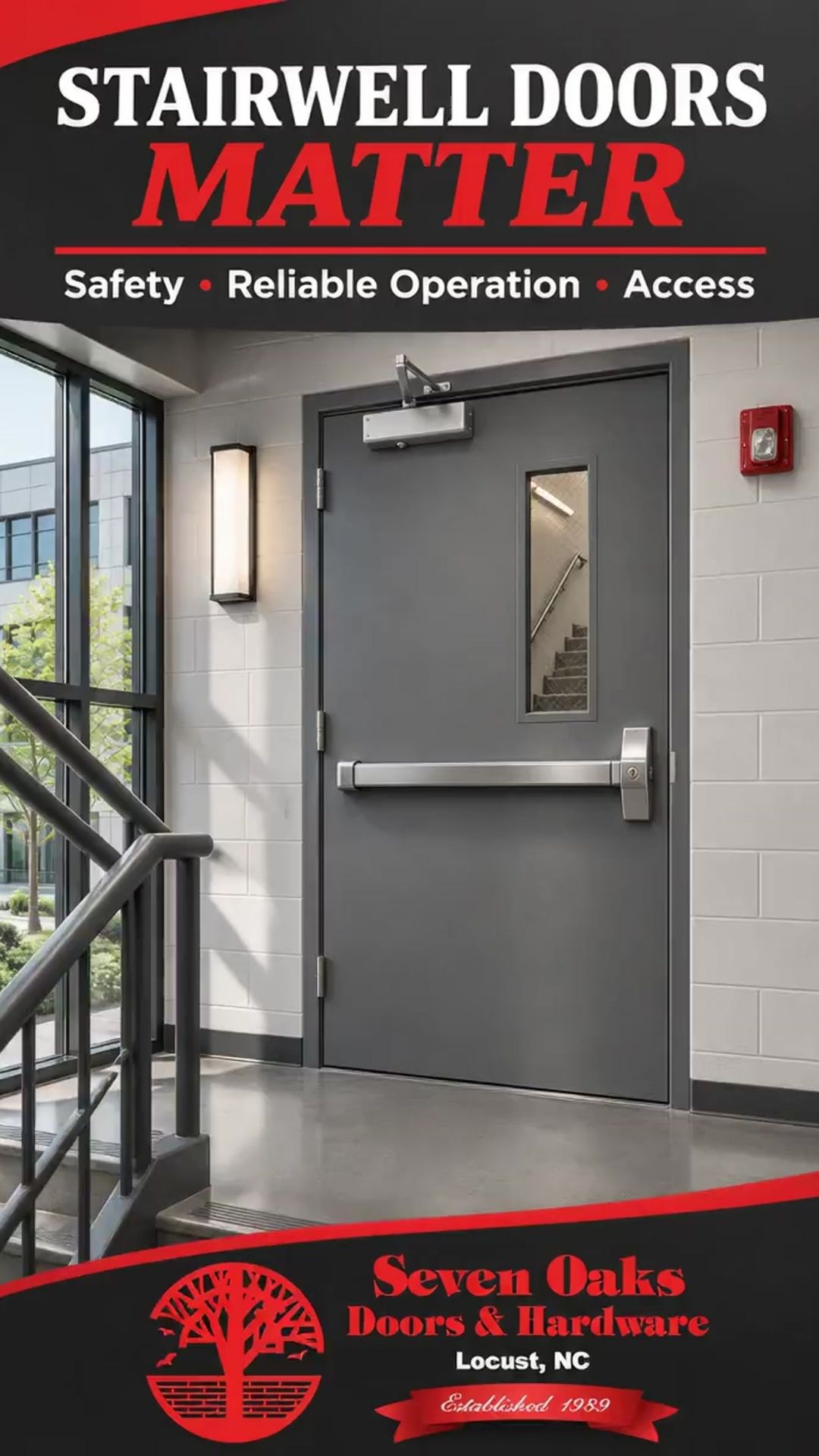
Commercial stairwell doors serve several important purposes at once. They help separate stairways from other areas of a building, support safe movement between floors, and may be part of a building’s fire-rated door system. The hardware needs to work reliably in daily use while meeting the requirements established for that specific opening.
When a stairwell door will not latch, is difficult to open, or has mismatched hardware, it can create operational and safety concerns. Facility managers planning a repair or upgrade should consider the complete opening—not just the lock or closer. The door, frame, hinges, latch, closer, exit hardware and access control may all affect how it functions.
Keep the fire-rated assembly in mind
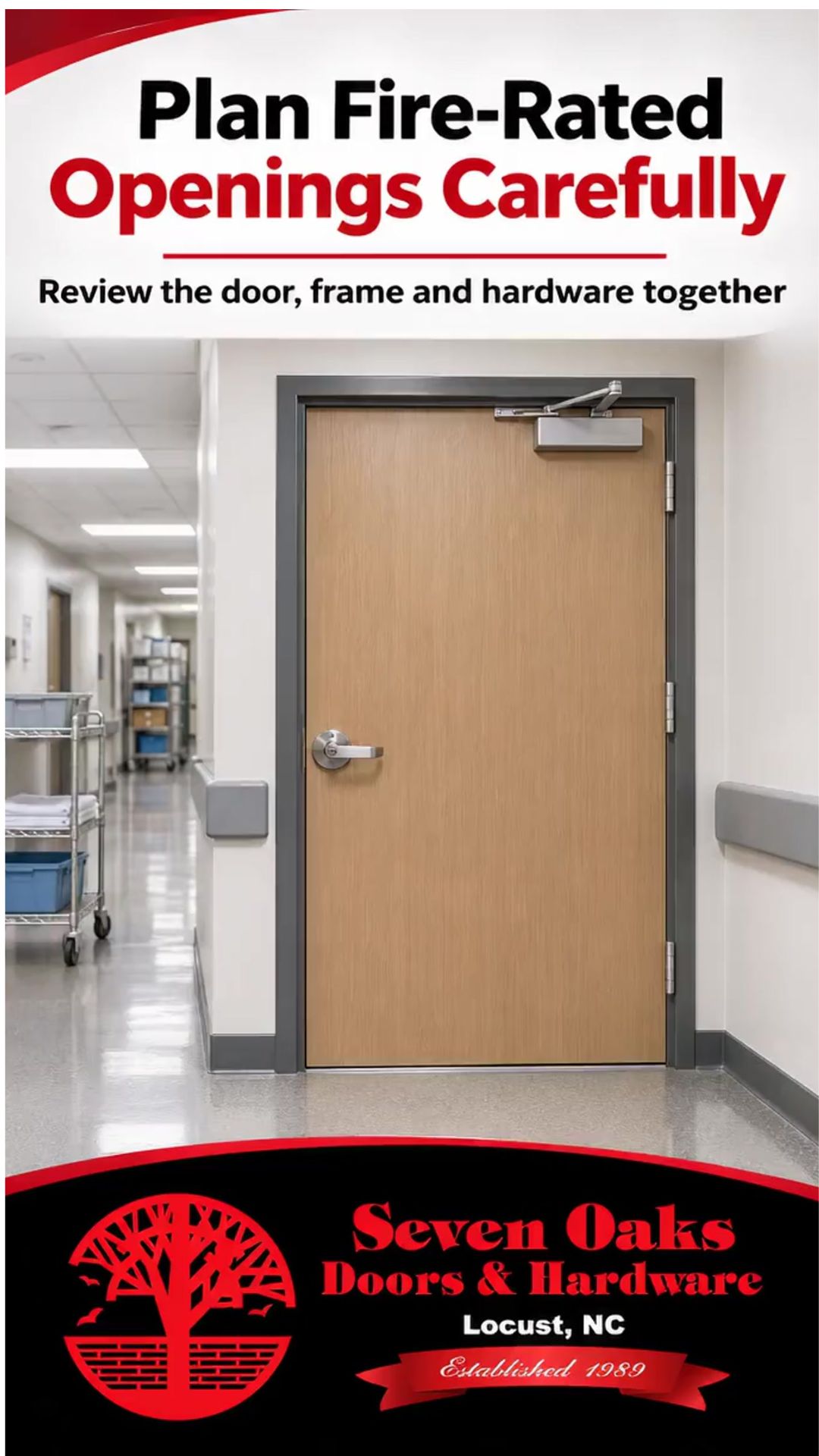
Where a stairwell opening is fire-rated, its components must be appropriate for the opening and work together as intended. Replacing or modifying one item without checking the rest of the assembly can create compatibility problems. Before changing hardware, identify any labels and existing components, and confirm what the opening requires with the appropriate building or fire-safety professionals.
Door condition matters, too. A damaged frame, loose hinges, worn latch or door that no longer closes properly may affect reliable operation. A review of the fire doors and hardware used in the opening can help a facility team understand the components involved and plan the next step.
Coordinate locking, access and reentry
Some buildings need controlled access from the stairwell back to occupied floors. The right setup depends on the building’s use, existing access system and applicable requirements. Consider who needs to enter from the stairwell, which floors require access, and how authorized users will be identified.
Access control should be planned alongside the door’s other hardware. The selected lock, reader, exit device and power arrangements need to suit the opening and coordinate with the building’s procedures. Seven Oaks provides electronic access solutions for commercial doors; the system and door hardware should be reviewed together before work begins.
Review closers, latches and everyday operation
A closer helps return a door to its closed position after people pass through. If it is damaged or poorly adjusted, the door may slam, remain open, or fail to latch consistently. A latch that does not engage reliably can also indicate a problem with alignment, hinges, the frame or the hardware itself.
During a site review, note doors that drag, bind, slam or require unusual force to open. Also check whether the hardware is loose, visibly damaged or difficult for staff to use. These observations help identify whether an adjustment, repair or broader upgrade should be considered.
Plan retrofits around the building
Stairwell door work often takes place in active buildings where residents, employees, visitors and service teams still need access. A retrofit plan can account for the number of openings, building traffic, access-control needs and the sequence of work. A coordinated review may also help identify related door or frame issues before installation begins.
Seven Oaks Doors & Hardware provides commercial door and hardware services in North Carolina, South Carolina and South Central Virginia. Learn more about commercial door retrofitting for existing facilities.
Start with the opening and its requirements
Before requesting a quote, gather the building location, number of stairwell openings, photos of each door and its hardware, and notes about any operating or access problems. Include details about the desired reentry function and any known requirements for the opening. This gives the project team useful information to review.
For help planning a stairwell door hardware project, contact Seven Oaks to request a quote. A review of the existing opening can help identify the appropriate next steps for your facility.